The first modern humans to settle in Vietnam were the Hoabinhians, who lived around 20,000 years ago. They were followed by other cultures, such as the Bắc Sơn, Quỳnh Văn, and Đa Bút, who developed agriculture and pottery.
Vietnam was ruled by various dynasties from the 3rd century BC to the 19th century AD, such as the Hồng Bàng, Thục, Triệu, Ngô, Đinh, Lê, Lý, Trần, Hồ, Mạc, Tây Sơn, and Nguyễn. Some of these dynasties were native to Vietnam, while others were influenced by China, which dominated Vietnam for several periods of time. Vietnam also had interactions with other neighboring countries, such as Cambodia, Laos, Thailand, and Champa.
Vietnam became a colony of France in the 19th century, after the French defeated the Nguyễn dynasty in the Cochinchina Campaign and the Sino-French War. The French exploited Vietnam’s natural resources and imposed their culture and religion on the locals. The Vietnamese fought against the French colonial rule in the First Indochina War (1946-1954), which ended with the Geneva Accords that divided Vietnam into two zones: North Vietnam under the communist Viet Minh led by Hồ Chí Minh, and South Vietnam under the anti-communist State of Vietnam led by Ngô Đình Diệm. The two sides soon resumed their conflict in the Second Indochina War (1955-1975), also known as the Vietnam War or the American War. The war involved the intervention of foreign powers, such as the United States, China, and the Soviet Union. The war resulted in millions of casualties and environmental damage. It ended with the Fall of Saigon in 1975, when the North Vietnamese army captured the South Vietnamese capital and reunified the country under the Socialist Republic of Vietnam.
Since then, Vietnam has undergone political and economic reforms to integrate with the world. It has established diplomatic relations with many countries and joined international organizations, such as ASEAN, APEC, WTO, and UN. It has also improved its human rights record and social welfare system. Vietnam is now one of the fastest-growing economies in Asia and a popular tourist destination.
AREA, sq km
Total: 331,210 Land: 310,070 Water: 21,140
NATURAL RESOURCES
Antimony, phosphates, coal, manganese, rare earth elements, bauxite, chromate, offshore oil and gas deposits, timber, hydropower, arable land
POPULATION
105,758,975 (2024 est.)
CAPITAL
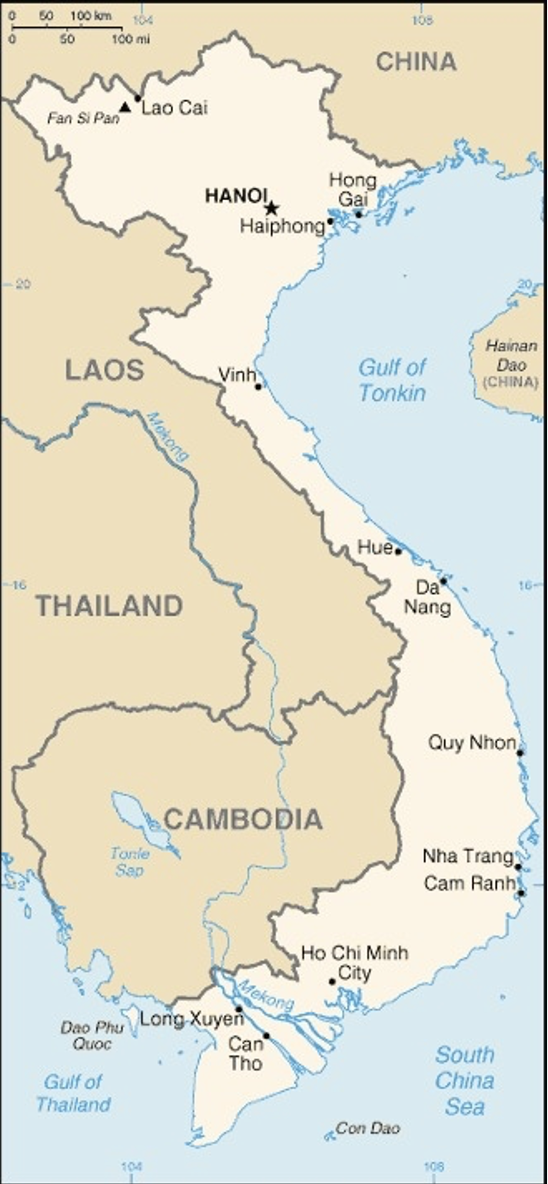
Hanoi (population 8,587,100 as of 2023); largest city: Ho Chi Minh City (Saigon, before 1976 capital of South Vietnam) (population 9,456,700 — 2023)
ETHNIC GROUPS
Kinh (Viet) 85.3%, Tay 1.9%, Thai 1.9%, Muong 1.5%, Khmer 1.4%, Mong 1.4%, Nung 1.1%, other 5.5% (2019 est.)
MAJOR LANGUAGES
Vietnamese (official), English (increasingly favored as a second language), some French, Chinese, and Khmer, mountain area languages (Mon-Khmer and Malayo-Polynesian)
MAJOR RELIGIONS
Buddhist 7.9%, Catholic 6.6%, Hoa Hao 1.7%, Cao Dai 0.9%, Protestant 0.9%, Muslim 0.1%, none 81.8% (2019)
TIME DIFFERENCE
UTC+7
GOVERNMENT TYPE
Communist state
ECONOMY
Lower middle-income socialist Southeast Asian economy; rapid economic growth since Đổi Mới reforms; strong investment and productivity growth; tourism and manufacturing hub; TPP signatory; declining poverty aside from ethnic minorities; systemic corruption
REAL GDP PER CAPITA
USD 13,700 (2023 est.)
INDUSTRIES
Food processing, garments, shoes, machine-building; mining, coal, steel; cement, chemical fertilizer, glass, tires, oil, mobile phones
Tipping 5-10% of the bill, if a service charge is not added, is polite at restaurants. At the bar, leave loose change or round up the bill. Bellhops expect USD 1 per bag for a gratuity. Good housekeeping service deserves USD 1-2 per day. Taxis do not expect a tip, but drivers appreciate hearing “keep the change.”
are based on various influences, such as Chinese culture, Confucianism, Buddhism, and ethnic diversity. Some of these are:
Respect for elders: The Vietnamese culture has a great respect for the elderly. In every situation, it is best to give honor and preference to the eldest member of the group. For example, when greeting someone older than you, you should bow slightly or nod your head, use formal titles such as “Mr.” or “Mrs.”, and avoid using first names unless invited to do so.
The head and the feet: The head is considered the most sacred part of the body and the foot is seen as the lowest. Therefore, it is rude to touch someone’s head, even children’s, or to point the feet at people, especially monks or religious figures. It is also disrespectful to step over someone or something, or to sit with the feet pointing upwards. On the other hand, it is polite to lower the head when passing by someone who is older or higher in status.
The dress code: Vietnamese people dress modestly and conservatively, especially when visiting religious or cultural sites. They avoid wearing clothing that exposes too much skin, such as shorts, skirts, tank tops, or low-cut shirts. They also cover their shoulders and knees when entering temples or palaces. They may also wear a scarf or a shawl to cover their head or wrap around their waist.
Gift giving is a common practice, especially on occasions such as birthdays, weddings, anniversaries, holidays, and housewarming parties. However, there are some rules to follow when giving or receiving gifts. For example, you should avoid giving gifts that are considered unlucky or inappropriate, such as clocks, knives, scissors, handkerchiefs, black or white items, or anything with the number four. You should also wrap your gifts in bright colors such as red, yellow, or pink. You should give and receive gifts with both hands and express your gratitude sincerely.
Alcohol consumption is a communal event. The Vietnamese love to drink alcohol with their friends, family, and co-workers, especially on special occasions or after work. They consider drinking as a way to bond, socialize, and show hospitality
The cheers: people often say “Một, hai, ba, vô!”, which means “One, two, three, cheers!”. This is a common toast that expresses enthusiasm and excitement. They also clink their glasses with each other and make eye contact to show respect and friendship.
MAJOR TOURIST DESTINATIONS
Hanoi is the capital and cultural hub of Vietnam, where you can experience the modern and traditional aspects of the country. You can visit the Temple of Literature, the Hoan Kiem Lake, and the Old Quarter. You can also enjoy the street food, coffee culture, and nightlife of this vibrant city.
Halong Bay is a UNESCO World Heritage Site and one of the most scenic places in Vietnam. It is a bay of emerald water dotted with thousands of limestone islands and islets, some of which have caves, grottoes, and beaches. You can take a cruise, kayak, or hike to explore this natural wonder.
Hoi An is an ancient town that preserves the charm and architecture of the past. It is famous for its lantern-lit streets, colorful markets, and tailor shops. You can also visit the historic sites, such as the Japanese Covered Bridge, the Old House of Tan Ky, and the Quan Cong Temple.
Ho Chi Minh City (Saigon) is the largest and most dynamic city in Vietnam, where you can witness the rapid development and diversity of the country. You can visit the Notre Dame Cathedral, the Reunification Palace, and the Ben Thanh Market.
Phu Quoc is a tropical island paradise in the Gulf of Thailand, where you can relax on the white sand beaches, swim in the clear blue water, and enjoy the fresh seafood. You can also visit the Phu Quoc National Park, which covers more than half of the island and has dense forests, waterfalls, and wildlife.
TRADITIONAL CUISINE
There are many traditional dishes that reflect the history, geography, and lifestyle of the Vietnamese people. Here are some of the most popular and delicious ones to name but a few:
Phở is the national dish of Vietnam, a noodle soup that can be made with beef or chicken broth, rice noodles, and various herbs and spices. Phở is usually eaten for breakfast, but can also be enjoyed at any time of the day. It is said that phở originated in the north of Vietnam, where it has a clear and simple broth, while in the south, it has a more complex and sweeter broth with more toppings and sauces.
Bún chả is a northern dish and consists of vermicelli noodles with grilled pork meatballs served over salad, herbs, bean sprouts, and sliced cucumbers. This is the dish that former US President Barack Obama ate at a Hanoi restaurant in 2016 with chef Anthony Bourdain, who was filming an episode of “Parts Unknown”. The restaurant, Bún Chả Hương Liên, has kept the table and utensils that they used in a glass case. It also offers a “Combo Obama” menu for 120,000 dong (about USD 5).
Bánh mì is a sandwich that combines the French influence of baguette bread with the Vietnamese ingredients of pâté, meat, pickled vegetables, cilantro, and chili sauce. It is a popular street food that can be found all over Vietnam, with different variations depending on the region and the vendor.
Cơm tấm is made with broken rice grains, which were once considered inferior and cheap, but are now a staple food for many Vietnamese. It is usually served with grilled pork chops, fried eggs, pickled vegetables, and fish sauce. It is a hearty and satisfying meal that can be eaten at any time of the day.
Cao lầu comes from the central part of Vietnam and has a lot of colors and textures, with different ingredients that make it delicious. It has a broth that is made from pork and shrimp, and noodles that are thick and yellow because of turmeric. It also has lettuce that is green and fresh, pork that is soft and earthy, shrimp that is tender and juicy, peanuts that are crunchy and nutty, and rice crackers that have sesame seeds on them.
Bánh cuốn are thin rice pancakes that are filled with minced pork and wood ear mushrooms, then steamed and served with fish sauce, fried shallots, and fresh herbs. It is a delicate and savory dish that originated in the north of Vietnam, but is now popular throughout the country.
Gỏi cuốn are fresh spring rolls that are made with rice paper wrappers, vermicelli noodles, shrimp or pork, lettuce, mint, and other herbs. They are dipped in a peanut sauce or a fish sauce before eating. It is a refreshing and healthy dish that can be eaten as an appetizer or a snack.
Bánh khọt is a type of Vietnamese mini savory pancake that is crispy on the outside and soft on the inside. It is made with rice flour, coconut milk, turmeric, and corn starch, and cooked in a special mold that gives it a round and thick shape. Bánh khọt is usually topped with shrimp, green onions, dried shrimp, or quail eggs, and served with fresh herbs, lettuce, and a sweet and sour fish sauce. It is a popular street food in southern Vietnam. It is also similar to bánh xèo, another Vietnamese savory pancake, but smaller and thicker.
CLIMATE
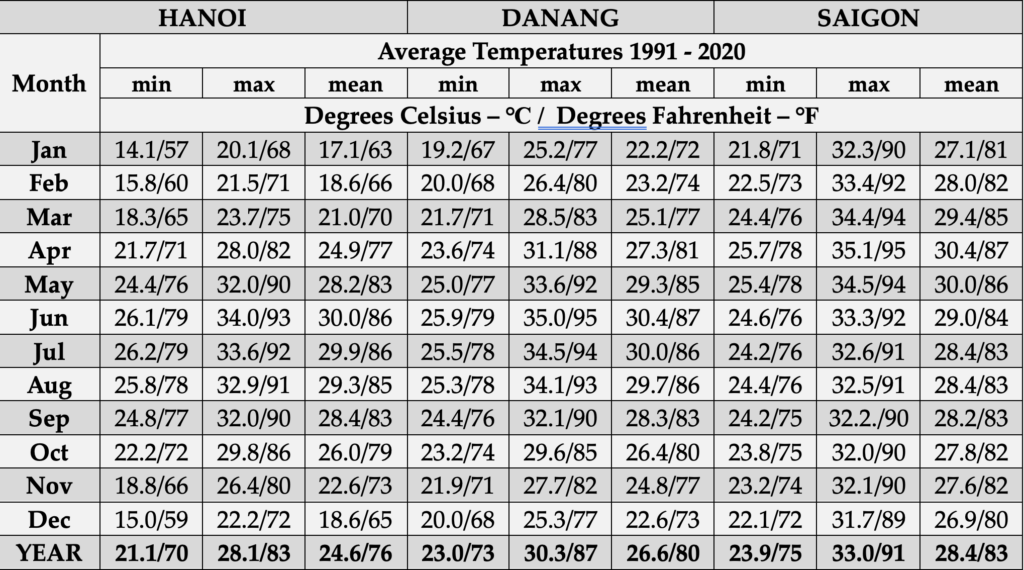
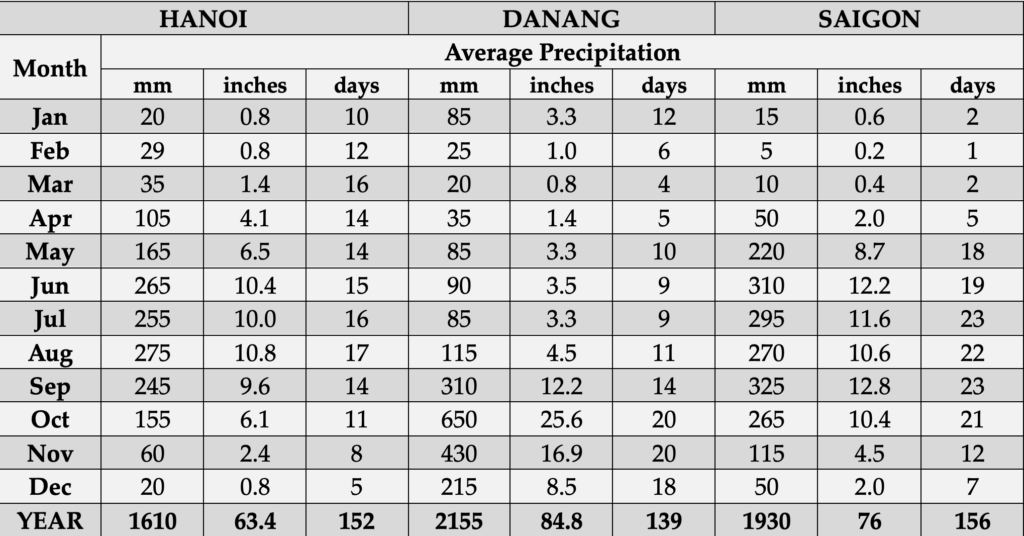
Vietnam has a subtropical climate in the north and a tropical climate in the center and south. The monsoons also affect the rainfall and temperature throughout the year.
The north has four seasons: winter, spring, summer, and autumn. Winter is from November to March, and is cool and dry, with average temperatures around 17°C (62.5°F) in Hanoi. Spring is from April to May, and is warm and humid, with some showers. Summer is from June to October, and is hot and rainy, with average temperatures around 29°C (84°F) in Hanoi. Autumn is from October to November, and is mild and dry, with clear skies.
The center and south have two seasons: rainy and dry. The rainy season is from May to October, and is hot and wet, with heavy downpours in the afternoon or evening. The dry season is from November to April, and is warm and sunny, with few showers. The average temperatures are higher than in the north, ranging from 22°C (72°F) to 34°C (93°F) throughout the year.
Vietnam also has different climates due to its topography and location. For example, the mountainous areas in the north, such as Sapa and Dalat, have a temperate climate, with cooler temperatures and more rainfall than the lowlands. The coastal areas in the east, such as Danang, Quy Nhon, and Nha Trang, have a tropical climate, with more sunshine and less rainfall than the inland areas. The Mekong Delta in the south is the warmest and wettest region of Vietnam, with high humidity and frequent floods.
Typhoons are tropical storms that form over the Pacific Ocean. They usually occur from June to November, and can bring strong winds, heavy rains, and high waves to the coastal areas of Vietnam. Typhoons can cause damage to infrastructure, crops, and lives.
The best time to visit Vietnam depends on your preferences and activities. Generally, the most pleasant months are from December to February in the north, from February to May in the center, and from December to April in the south. However, you can also enjoy different aspects of Vietnam’s culture and nature in other seasons. For example, you can see the rice terraces in full bloom in September in Sapa, or celebrate the Lunar New Year (Tết) in January or February throughout the country.
PASSPORT/VISA REQUIREMENTS
A passport valid for at least six months following your date of entry with at least two blank pages for immigration stamps. A temporary passport may not be accepted.
A visa to enter Vietnam, unless you are from one of the 25 countries that are exempted from visa requirement for a certain period of time.
Vietnam grants e-visas for citizens of all countries and territories with 90-day stay duration and valid for single or multiple entry. You can apply for an e-visa online by filling out a form (here or here) and paying a fee of USD 25 for a single or USD 50 for a multiple entry visa.
You must present your passport and visa (or e-visa) to the immigration officers at the border gates when entering or leaving Vietnam. You must also declare any Vietnamese Dong in excess of VND 150,000,000 or foreign currency in excess of USD 5,000 or equivalent.
VACCINATIONS
An International Certificate of Vaccination for yellow fever is required for travelers arriving from countries with a risk of yellow fever transmission and for travelers having transited through the airport of a country with risk of yellow fever transmission.
WHAT TO PACK
Clothing
Lightweight, light-colored, and breathable clothing to cope with the heat and humidity.
A light raincoat or umbrella if traveling in the rainy season.
A long scarf or a sarong to wrap around yourself when needed. You should also remove your shoes before entering a temple or a private home.
Hygiene
Some toiletries and accessories that can help you stay clean and healthy during your trip.
Sunscreen, insect repellent, hand sanitizer, a microfiber travel towel, a reusable water bottle with a filter, and some snacks.
Some basic medicines for common ailments, such as painkillers, antihistamines, antidiarrheals, and rehydration salts.
Activities
Some electronics and entertainment items that can help you enjoy your trip and capture your memories.
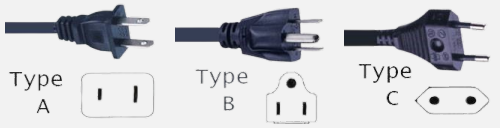
Phone, charger, power bank, earphones, camera, laptop or tablet, e-reader or books.
Comfortable sandals or shoes that are easy to take on and off.
Insect repellent, a hat, sunglasses, and a camera for exploring the countryside or the islands.
Security
An anti-theft backpack that has hidden zippers and slash-proof material. Some padlocks for bags and a neck wallet for passport, cash, credit cards, and phone.
Use a VPN service when connecting to public WiFi sources, as they may not be secure.
Be aware of some of the common scams and dangers that tourists may encounter, such as taxi overcharging, fake money, or pickpocketing. Like anywhere in the world, always be alert and cautious when traveling in Vietnam.